
What Is Synthetic Stucco
What is Synthetic Stucco?
Why Was Synthetic Stucco Used?
What are the problems with Charlotte EIFS?
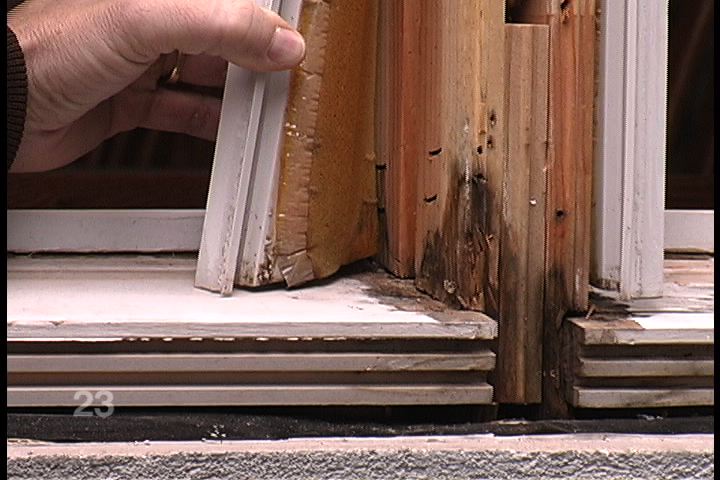
In the early 1990’s, problems were discovered on homes with EIFS located in Wilmington, North Carolina. Removal of the stucco revealed extensive structural damage to the homes as a result of moisture intrusion behind the stucco. Local building officials called in the builders, architects, and stucco manufacturers to evaluate the problem.
The examination of the home revealed moisture was intruding behind the stucco cladding, as a result of poor design and installation. Installation defects include failure to install proper window, door, and kickout flashings, and leaking windows. In addition to the moisture related problems, it was discovered that the foam behind the stucco, when installed at or below grade, was conductive to termite and fire ant infestation.
As a result of problems discovered with synthetic stucco cladded homes, inspection and testing protocols were created. Adopting Charlotte’s Moisture Warranty stucco inspection protocols, the Exterior Design Institute, located in Virginia, was formed to educate and train independent, third party, eifs inspectors.
Synthetic Stucco Inspections
The visual inspection accesses the installation of the stucco. The inspector verifies whether flashings are properly installed. The stucco is checked for any signs of damage, cracking, and delamination. The inspector will determine if the stucco system terminates above or below grade. The windows and doors, porches and decks, and utility penetrations are carefully examined.
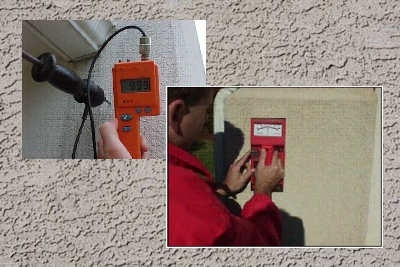
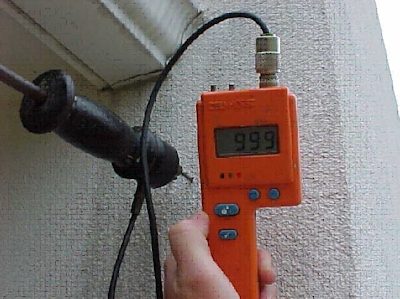
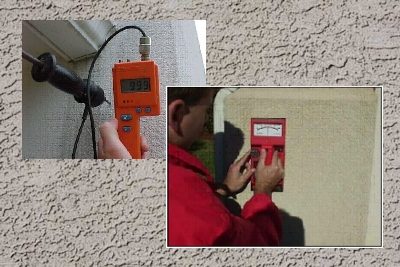
The Charlotte home is then scanned for moisture using a non-invasive meter, typically a Tramex Wet Wall Scanner. This type of meter will scan up to 3 inches behind the stucco for any signs of moisture. The drawback to this type of meter is that false positives may occur as a result of metal installed behind the stucco, such as metal studs, electrical wiring, and plumbing piping. Inspection protocols require that specific areas be tested using a probe meter. With permission from the homeowner, two holes are drilled in each probe location. The probe meter will provide readings of the actual moisture content of the sheathing behind the stucco. Moisture readings below 14% are considered low, between 14 and 18% medium, and readings above 18% high. Moisture levels above 25% for an extended period are conducive to rot to the wood framing and sheathing, as well as mold and mildew.
All readings are recorded, and digital color photos are taken to document the condition of the system, including components installed correctly and incorrectly. A computer report is compiled from this data.

Latest Stucco Information
We offer Stucco home inspection services in Charlotte NC.
We have inspected thousands of stucco homes in the greater Charlotte area as well as throughout the Southeast and have found numerous problems due to improper installation practices. Most problems are easily corrected but some are severe and can be very costly to...

Recent Comments